Half Your New Revenue Comes From Customers You Already Have
Acquisition gets the attention, the budget and the dashboard. The larger half of new revenue arrives from accounts already signed, and it is usually nobody's job.
Insights, tutorials, and industry updates from our team of developers and AI specialists. Stay ahead of the curve with the latest in technology and development practices.

Acquisition gets the attention, the budget and the dashboard. The larger half of new revenue arrives from accounts already signed, and it is usually nobody's job.

Most retention work targets customers who decided to leave. A meaningful share never decided anything, and winning them back needs no product change at all.

Rates did not fall. Rates for one kind of work fell while rates for another rose, and the platforms have already repriced their own fees to match.

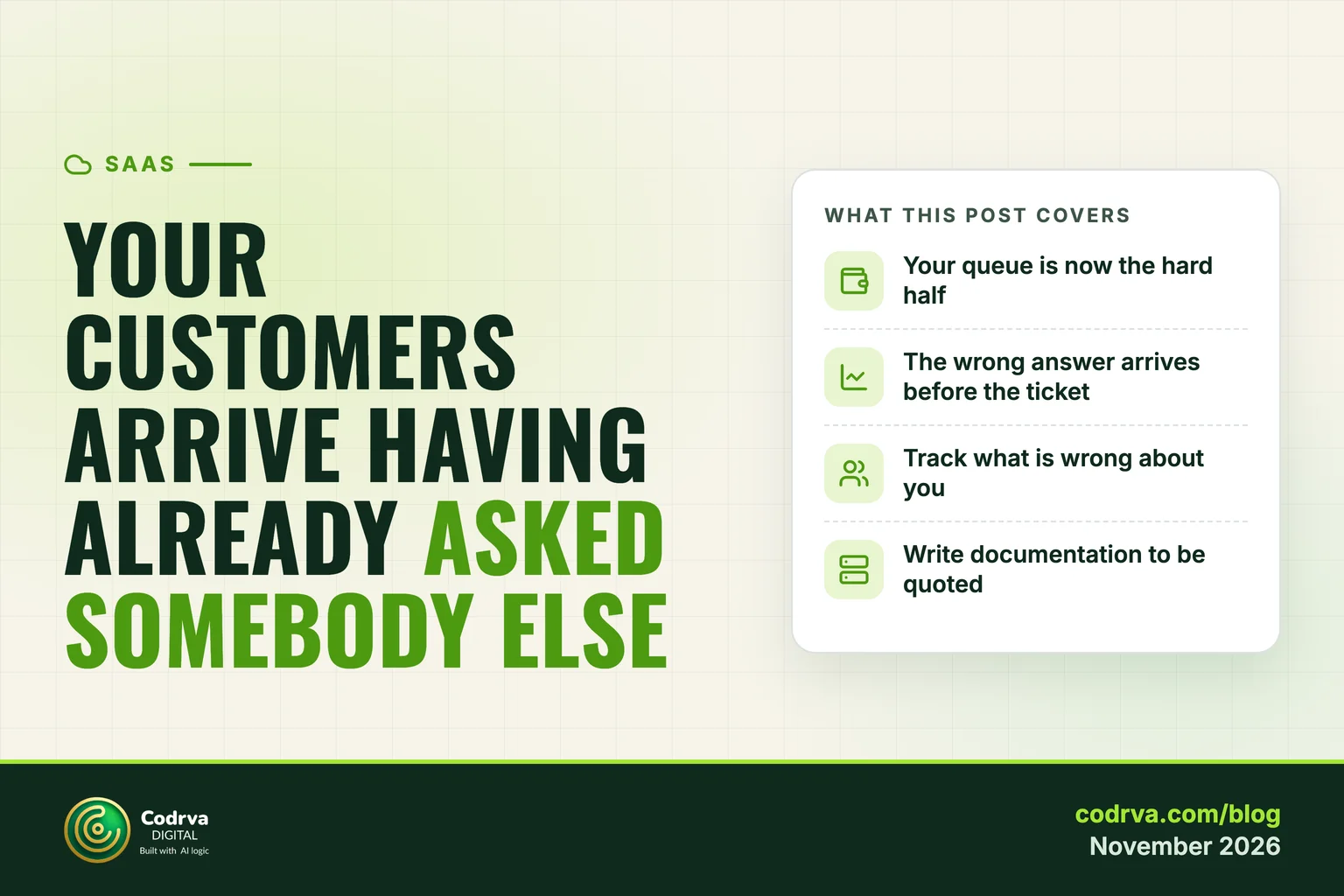
Your ticket volume fell and your average handling time rose. Both are the same event: the questions you used to answer easily are being answered somewhere else.

Your price is fixed and your cost is not. That is a bet on average behaviour, and averages are exactly what your most enthusiastic customers ignore.

It is a fair question asked in good faith, and the defensive answer loses the account. There is a better one, and it starts by conceding the part that is true.

Multi tenancy worked because one customer's usage barely affected your costs. Inference changes that arithmetic, and a single enthusiastic tenant can now consume more than the rest of your customer base combined.

Your team produces code several times faster than a year ago and ships at roughly the same rate. That is not a failure of adoption. It is what happens when you speed up one stage of a process and leave the rest untouched.

Your renewal now has a line item measured in outcomes rather than users. That sounds fairer than paying for seats nobody logs into, and it moves a risk onto you that per seat pricing never carried.

Around two trillion dollars has come off software market capitalisation since the start of the year. The products did not get worse. What changed is what buyers believe they are paying for, and that belief has a direct effect on your renewals.

Revenue is up 40 percent and your cloud bill is up 70 percent. That gap compounds until growth stops improving your margins and starts eroding them. Here is how to find where the money actually goes.

Two pricing problems arrive together: the unit you charge for has stopped matching value, and the boundaries between your tiers punish the customers who grow fastest.
Get the latest posts delivered right to your inbox.
Acquisition gets the attention, the budget and the dashboard. The larger half of...
Nov 22, 2026
Most retention work targets customers who decided to leave. A meaningful share n...
Nov 16, 2026
Rates did not fall. Rates for one kind of work fell while rates for another rose...
Nov 6, 2026
Your ticket volume fell and your average handling time rose. Both are the same e...
Nov 2, 2026
Your price is fixed and your cost is not. That is a bet on average behaviour, an...
Oct 24, 2026
It is a fair question asked in good faith, and the defensive answer loses the ac...
Oct 14, 2026
Multi tenancy worked because one customer's usage barely affected your costs. In...
Sep 28, 2026
Your team produces code several times faster than a year ago and ships at roughl...
Sep 17, 2026
Your renewal now has a line item measured in outcomes rather than users. That so...
Sep 10, 2026
Around two trillion dollars has come off software market capitalisation since th...
Sep 8, 2026